
Renovating a kitchen for the first time can feel almost overwhelming. There is much to think about, including budgets, layouts, materials, and rapidly evolving technology.
It is easy, for example, to focus on work surface choices and miss the decisions that really matter long term. A successful kitchen renovation isn’t just about how your space looks on day one, but also about how well it will perform, adapt and last over the next ten years.
This beginner’s guide breaks down the process of renovating a kitchen into clear, manageable steps. From the first step of setting a future-proof budget to choosing durable materials, planning smarter layouts and integrating modern technology.
In this article, we guide you on how to make informed choices that will protect your investment and improve your everyday living in your new and well-planned kitchen conversion.
1. Budget Smartly Using the “Core-First” Strategy
One of the most common renovation mistakes beginners make is spending too much of their budget on visible finishes and not enough on the infrastructure behind them. Experienced designers recommend a Core-First budgeting strategy – which is also known as modular investing.
How Core-First Budgeting works
The recommendation is to spend about 80% of your budget on permanent elements, including:
- Plumbing and electrical upgrades
- Structural lighting and wiring
- High-quality cabinetry carcasses
- Flooring preparation and underfloor heating
The remaining 20% should be allocated for surface items, including:
- Cabinet fronts
- Handles and taps
- Decorative lighting
The thinking behind this strategy is that these surface elements are easier and cheaper to update later as fashion trends change.
Always add a Tech Contingency
A modern beginner’s budget should always include a technology contingency. Even if you are not installing advanced systems immediately, it is best and more economical to allow for:
- High-speed data cabling
- Additional sockets and USB points
- Power supply for future smart appliances
This future-proofing avoids costly rewiring later and keeps your kitchen relevant well beyond 2026, which is particularly relevant if there is a chance you could want to sell your property.
2. Layout Planning: Beyond the Traditional Triangle
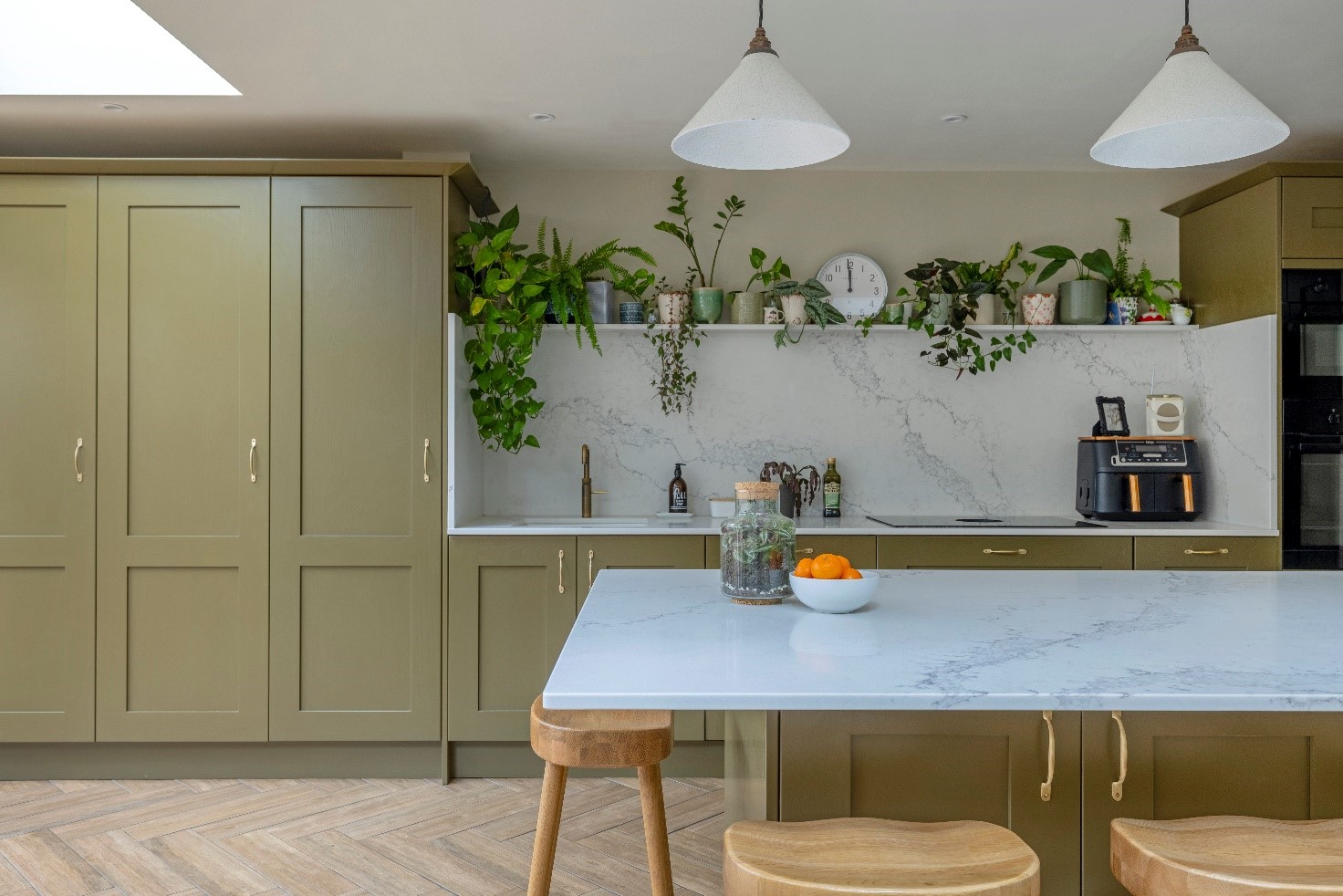
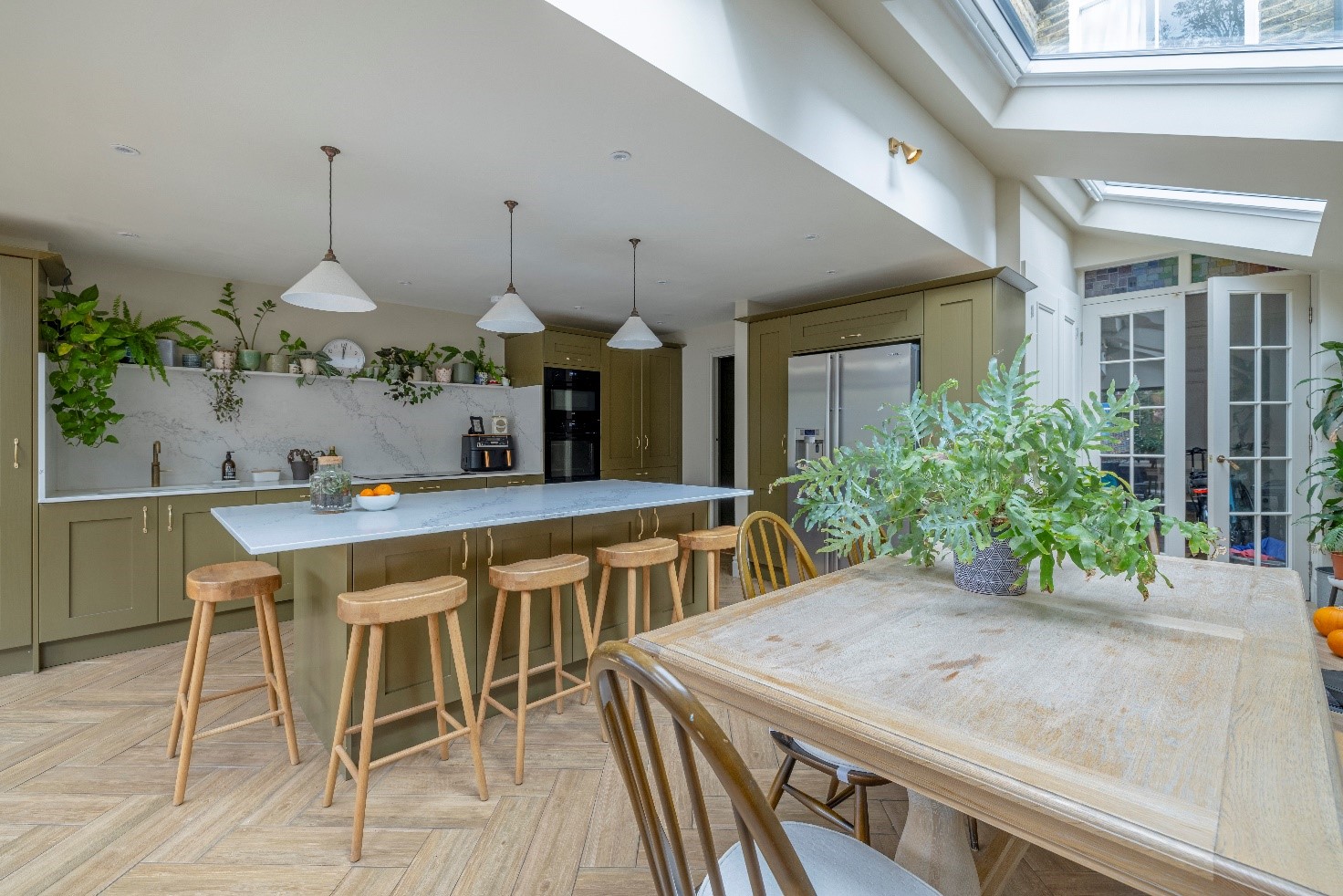
The classic kitchen “work triangle” no longer reflects how kitchens are used today. The work triangle is a long-standing kitchen design principle that dates from the 1940s. It was created to make kitchens more efficient by reducing unnecessary movement whilst cooking, and was designed for one person to work in comfortably. The triangle connects the three main work zones in a traditional kitchen: the sink, the cooker/hob and the fridge.
The work triangle still appears in design guides, but it doesn’t reflect how modern kitchens are used today.
Modern homes demand flexibility, multitasking, and social interaction as they function as social, work and living spaces. When the work triangle was first designed, technology, coffee stations, and charging areas were not part of the original model
Today, activity-based zoning has replaced the triangle model, as this is more versatile:
- Prep zone – worktop space near the fridge and food storage
- Cooking zone – hob, oven and ventilation all placed together
- Cleaning zone – sink, dishwasher and waste/recycling facilities
- Coffee / hydration station with coffee machines and other drink-making facilities
- Digital work or homework area – space for laptops, tablets and homework books
- Social buffer between guests and hot kitchen appliances – an island or peninsula that allows guests to sit and interact without being in the cooking zone.
3. Materials: Choose Low- Maintenance Luxury
Many first-time renovators are drawn to high-maintenance materials that look beautiful but require constant care. In 2026, the focus has shifted to materials that offer durable luxury- they have a premium look with minimum care required.
Worktops & Surfaces
Consider replacing traditional marble worktops with sintered stone or porcelain slabs (like Dekton) as they are scratch and heat-resistant, are non-porous, stain-proof surfaces and are available in carbon-neutral manufacturing options. They promise longevity without compromise.
Cabinetry Construction
Choose plywood shells instead of standard MDF for strength and moisture resistance. Look for anti-fingerprint finishes – especially if choosing matt finishes or darker tones. Check that cupboards are fitted with soft-close hinges and drawers, as they protect the cabinetry over time.
4. Lighting for Health and Mood as well as Function
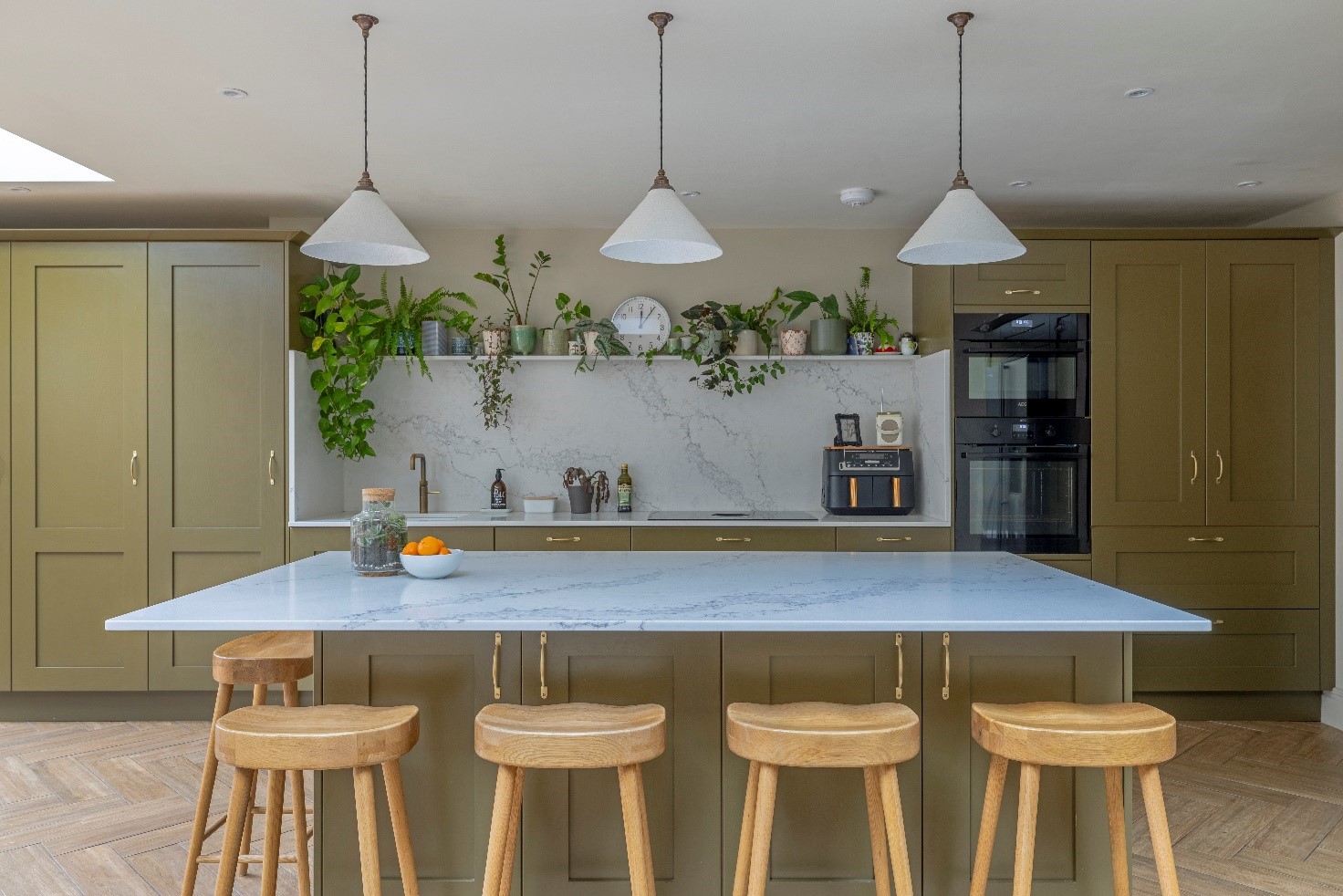
Lighting is no longer just about visibility for ease of working in the kitchen. Kitchen lighting is designed to support health and wellness, and it is best if it adapts to how you use the space throughout the day.
Circadian Lighting Systems
Smart lighting can now alter throughout the day and maximise the use of natural daylight. Smart systems provide cooler, brighter light in the morning for focus and then transition to neutral tones during prep and cooking. In the evening, they change again to amber hues to encourage relaxation.
This type of lighting improves comfort and supports natural sleep cycles – this is especially important in open-plan homes.
Invisible and Integrated Lighting
There are several beginner-friendly upgrades to improve the lighting in your kitchen, and these include:
- LED strips fitted under cabinets and shelves
- Drawer-integrated lighting
- Toe-kick LEDs for safe night-time navigation of the space
These subtle additions will elevate the style of the kitchen without adding any visual clutter.
5. Energy Efficiency: Embrace the All-Electric Kitchen
Kitchen renovations are becoming increasingly all-electric. This move has been driven by efficiency, sustainability and future regulations.
What’s Replacing Gas?
- Induction hobs for fast, safe, energy-efficient cooking
- Heat pump integration for hot water and space heating
- High-efficiency electric ovens with smart energy management
Water Conservation Innovations
Modern kitchens now support sustainability through the use of:
- 4-in-1 taps (boiling, chilled, sparkling, filtered)
- The reduction of plastic waste from bottled water
- Lower energy use compared to kettles and fridges
Some advanced homes now have integrated atmospheric water systems, though these remain optional for most beginners.
6. The Digital Hub: The Renovation Essential
One of the most overlooked elements in beginner kitchen renovations is the management of technology. In 2026, kitchens will function as smart home command centres, and they need a dedicated space to support that.
Create a Tech Drop Zone
Plan room for a well-ventilated, concealed cabinet to store Wi-Fi routers, Smart home hubs, Voice assistants (Alexa, can you….) and charging ports for phones and tablets.
This keeps worktops clear, improves signal performance, and avoids unsightly cables disrupting your design.
7. Storage Planning That Grows with You
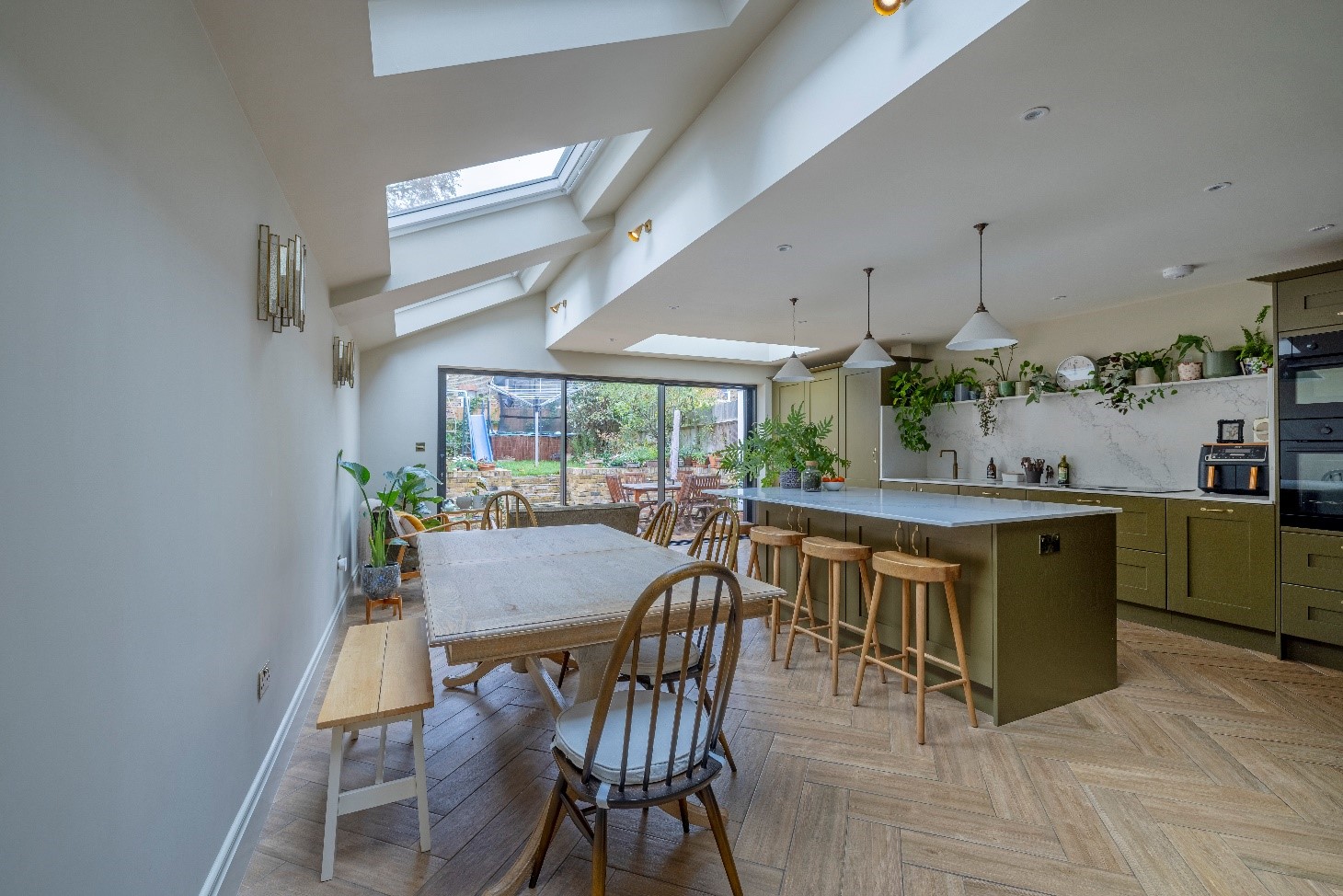
Good storage is less about quantity and more about adaptability. Beginners should focus on modular storage systems that can evolve as and when needed.
Smart storage ideas include: internal drawer dividers, pull-out larders, corner carousel shelf units and appliance storage to hide clutter.
If space is limited, think vertically and use full-height cabinetry to maximise space without overcrowding the room and taking up precious floor space.
8. Ventilation and Acoustics are Important
A quiet, well-ventilated kitchen is essential for comfort — especially in open-plan homes.
Ventilation Tips
Proper ventilation is essential for maintaining air quality and comfort:
- Choose an extraction system that is correctly sized for your space.
- Consider installing integrated downdraft systems for minimal visual impact.
Planning ventilation carefully effectively removes cooking odours, steam and airborne grease.
Acoustic Comfort
Look for the following to keep your kitchen space quieter and more tranquil:
- Sound-dampening cabinet panels
- Ultra-quiet dishwashers and extractors
Choosing these features will allow the kitchen to double as a workspace or relaxation zone without any background noise.
9. Planning Permissions and Practical Timings
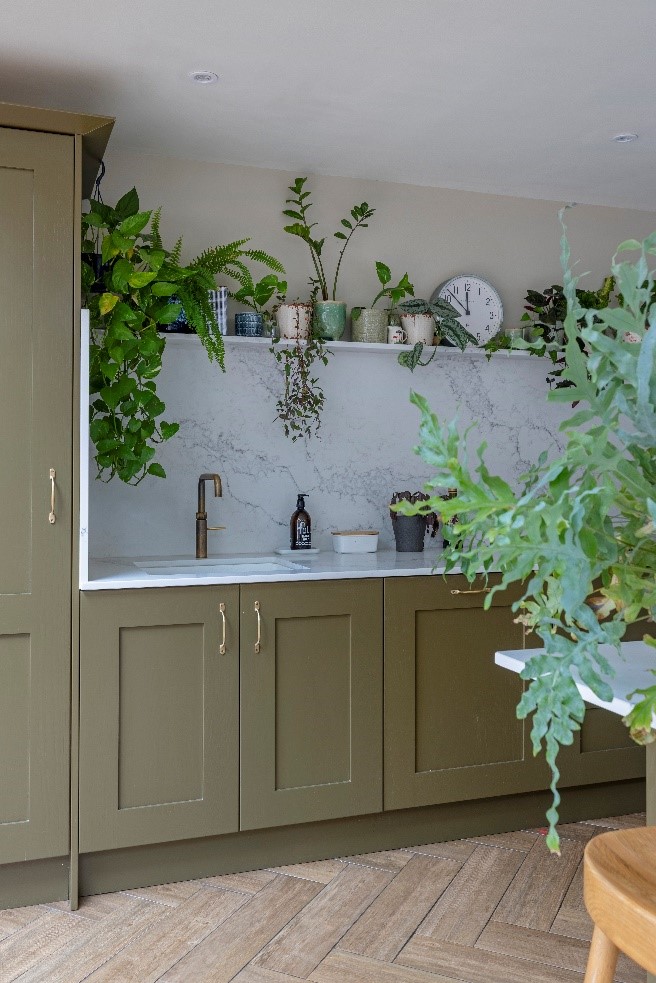
Whilst many kitchen renovations fall under permitted development, it is essential to check that your kitchen renovation plans will conform:
- Confirm any planned structural changes with local authorities
- Allow contingency time for inspections and approvals
Planning a realistic renovation timeline helps reduce stress, avoid rushed decisions and unnecessary costs.
A kitchen renovation is one of the most complex upgrades you can make to your home, and getting it right depends on expert planning as much as good design. From structural layouts and services to materials, lighting and technology, experienced professionals can help you ensure every decision works together seamlessly.
If you’re considering a kitchen renovation and want guidance you can trust, Build Team can help you plan, design and deliver a kitchen that is built to last.
Contact BuildTeam today to discuss your ideas and request a tailored quote – and take the first step toward a kitchen that truly works for your home and lifestyle. Our email: hello@buildteam.com Our telephone: 0207 495 6561.