
Lambeth: is it cheaper to extend or move in 2026?

For homeowners in Lambeth (London Borough of Lambeth). Updated 2026-06-11.

Inner south-west London. Substantial Victorian and Edwardian terrace stock — Clapham, Brixton, Streatham, Herne Hill, Tulse Hill, West Norwood. Side returns common across the borough. Many streets in conservation areas with Article 4 directions.

The borough covers the SE1, SE5, SE11, SE17, SE19, SE21, SE24, SE27, SW2, SW4, SW8, SW9, SW12, SW16 postcode districts. Terraced homes here trade around £905,000 against the borough-wide £615,000 average.
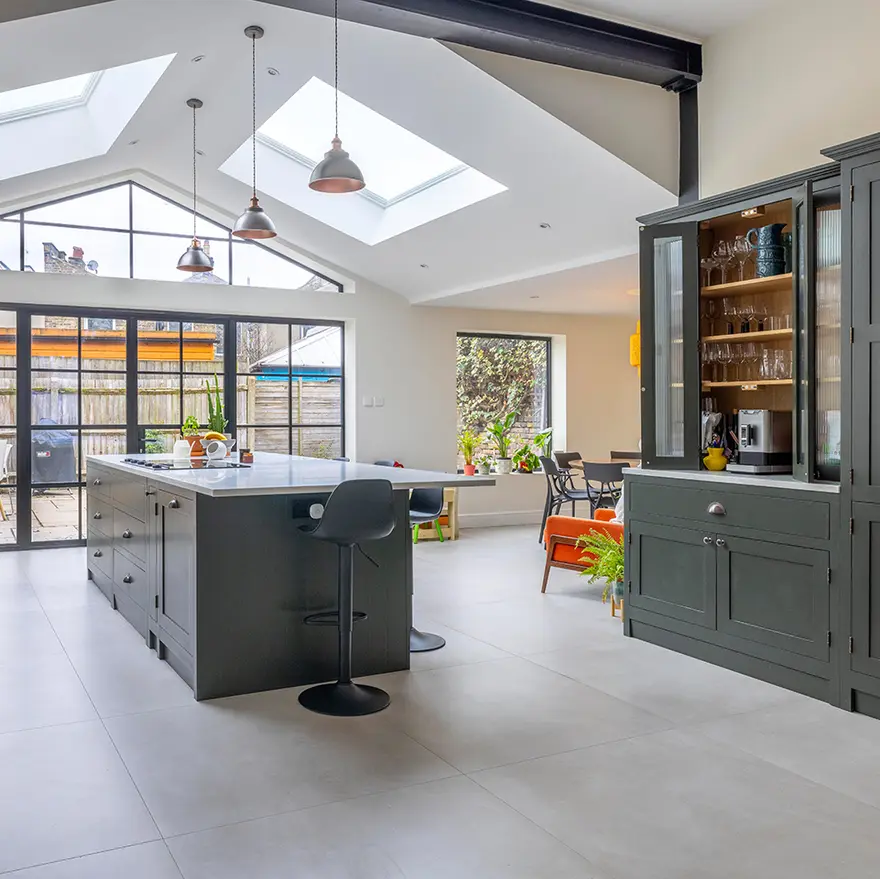
Completed Build Team side return kitchen extension to a terraced house in Brixton (Lambeth, SW2)
Build Team side return extension, Bonham Road (Brixton, SW2) — view this project

In short

In Lambeth, the average home is valued at £615,000. Moving up by 60% to a £985,000 property triggers approximately £42,250 in Stamp Duty Land Tax (SDLT). By contrast, a 12 m² high-spec side return extension here costs around £82,524 all-in. Lambeth has 62 conservation areas — among the most of any London borough.

Your numbers

Adjust the inputs to see your scenario. The page updates instantly as you adjust the inputs.

Property values

Our tool assumes your new property costs more than your current one.

Recommended types reflect Lambeth's typical housing stock.

Spec tier
12 m²
Advanced: buyer profile

Your result

Moving is £10,274 cheaper than extending

Move

Total: £72,250

SDLT (HMRC)
£42,250
Estate-agent fee
£9,225
Survey
£1,500
Legal (sale + purchase)
£2,500
Removals
£2,000
Chain contingency (1.5%)
£14,775

Extend

Side return extension — high spec

Total: £82,524

Build cost (12 m² × £4,600/m²)
£55,200
Professional fees (15%)
£8,280
Subtotal
£63,480
VAT (20%)
£12,696
Contingency (10%)
£6,348

An extension of this type and size could add roughly £79,950 (≈13%) to your home's value — Nationwide Building Society, October 2025.

Your tipping line

Where moving starts costing more than the extension you selected. The chart follows your inputs above.

£150k£300k£450k£600k£2.3m£4mTarget property valueMovingExtendingYour target£1.1m — tipping line

Up to about £1,075,000 of target price, moving is the cheaper route in Lambeth; beyond that line, extending wins.

Extending in Lambeth: what's different here

Local planning picture

Conservation areas
62
Householder decisions within 8 weeks
59%
Build-cost tier
inner London
Typical housing stock
Victorian and Edwardian terraces

Decision speed: MHCLG householder statistics, year ending September 2025, excluding agreed extensions of time.

Worth knowing in Lambeth

  • Lambeth has 62 conservation areas — among the most of any London borough.
  • The average home here is around £615,000 (ONS, 2026).
  • Extension types suited to Victorian and Edwardian terraces: Side return extension, Rear extension (single storey), Wrap-around extension, Kitchen extension, Loft conversion (dormer), Loft conversion (mansard).

How the £42,250 stamp duty stacks up

HMRC bands applied to a £985,000 purchase — the default Lambeth trade-up.

Price band Rate SDLT due
£0 – £125,000 0% £0
£125,000 – £250,000 2% £2,500
£250,000 – £925,000 5% £33,750
£925,000 – £1,500,000 10% £6,000

What each suitable type costs vs the £72,250 move

High specification at typical size, inner London rates, all-in.

Extension type All-in cost vs moving
Side return extension (12 m²) £82,524 £10,274 more than moving
Rear extension (single storey) (22 m²) £124,982 £52,732 more than moving
Wrap-around extension (25 m²) £108,388 £36,138 more than moving
Kitchen extension (22 m²) £124,982 £52,732 more than moving
Loft conversion (dormer) (18 m²) £47,093 saves £25,157 vs moving
Loft conversion (mansard) (30 m²) £103,155 £30,905 more than moving

Why this comparison matters

"Authorities granted 90% of these applications and decided 93% within eight weeks or the agreed time."
— MHCLG — Planning applications in England: October to December 2025

Frequently asked questions

Is it cheaper to extend or move in Lambeth?
At Lambeth's average £615,000 home moving up to £985,000, the move costs about £72,250 — including £42,250 of HMRC Stamp Duty. A 12 m² high-spec side return extension runs roughly £82,524 at inner London rates. Moving is cheaper here by about £10,274. Your real figure depends on extension size, specification and planning constraints.
At what price does moving stop making sense in Lambeth?
Starting from Lambeth's average £615,000 home with a 12 m² high-spec side return extension (£82,524 all-in), the tipping line sits at roughly £1,075,000: buying above that price costs more in SDLT and moving fees than the extension itself. Below it, moving stays the cheaper route. The live chart on this page recalculates the line for your own inputs.
How much stamp duty would I pay moving up in Lambeth?
On a typical Lambeth trade-up from £615,000 to £985,000 (a 60% step up), Stamp Duty Land Tax (SDLT) is £42,250 — an effective rate of 4.29%. First-time buyers and additional-property buyers pay different rates. Use HMRC's official calculator at tax.service.gov.uk for your exact figure. HMRC Stamp Duty calculator
How much does an extension cost in Lambeth in 2026?
Budget around £83,000 all-in for a high-spec 12 m² side return extension here — inner London build rates run near £4,600/m². For a 22 m² rear extension (single storey) expect roughly £125,000. Those totals already carry 15% professional fees, 20% VAT and a 10% contingency; access, specification and ground conditions move the final number.
How long does planning permission take in Lambeth?
The statutory determination period for a householder application is 8 weeks. London Borough of Lambeth decided 59% of householder applications within 8 weeks in the year to September 2025 (MHCLG figures, excluding agreed extensions of time). Across London, authorities grant roughly low-to-mid 80s per cent of applications. A householder application costs £548 from April 2026, and a Larger Home Extension prior approval £240.
Do I need planning permission for an extension in Lambeth?
Many single-storey rear extensions fall under Permitted Development — no planning permission needed. Lambeth operates Article 4 directions in named conservation areas (Clapham Old Town, Stockwell, Brixton, Herne Hill among others) and a borough-wide HMO Article 4. Direction coverage is substantial across the borough's Victorian and Edwardian terrace stock. Lambeth has 62 conservation areas, including Clapham Old Town, Clapham Common, Stockwell, where PD rights are curtailed. Side extensions, large rear extensions and most wraparounds need full planning regardless. Check the London Borough of Lambeth planning portal first. Open the London Borough of Lambeth planning portal
How long does a side return extension take in Lambeth?
Allow around 16 weeks on site for a typical side return extension in Lambeth, after design, party wall agreements with neighbours and the council's determination period. A rear extension (single storey) runs nearer 16 weeks. End to end, plan 4–8 months from first call to completion — longer in conservation areas or where structural surveys are needed.
How much value does an extension add in Lambeth?
On a £615,000 Lambeth home, the uplift is roughly £80,000 to £147,600: Nationwide Building Society (October 2025) put an extra double bedroom at about 13% of value, and a full loft conversion plus extension at up to 24%. The realised return depends on your street's ceiling price, buyer demand in Lambeth and the specification you choose.
Can I live in my home during the extension build?
Most Lambeth families stay in their home during a single-storey rear or side return extension — the build is contained to the back, and your kitchen is typically rebuilt in 2–3 weeks of disruption. Loft conversions and full wraparounds are harder: expect 4–6 weeks where one floor is unusable. Plan for temporary kitchen arrangements and dust everywhere.

Compare nearby London boroughs

Nearby by average property value — useful if you're weighing a move to an adjacent price tier. A comparable trade-up in Hackney would carry about £41,750 of stamp duty — £500 less than in Lambeth.

See all 33 London boroughs

Methodology and sources

Stamp Duty Land Tax is calculated from the HMRC bands in force for the 2025–26 tax year. Verify any figure against HMRC's official calculator before committing. Extension costs use inner London £/m² rates by extension type — industry-estimate midpoints, presented as approximations.

  • HMRC SDLT calculator — tax.service.gov.uk/calculate-stamp-duty-land-tax
  • GOV.UK Stamp Duty Land Tax guidance — gov.uk/stamp-duty-land-tax
  • Nationwide House Price Index (October 2025 release) — value-add commentary attributed to Andrew Harvey, Senior Economist.
  • HM Land Registry / ONS UK House Price Index — borough average property values (March 2026 release).
  • MHCLG planning statistics (PS2 dashboard) — householder decision speed, year ending September 2025.
  • London 2026 £/m² grid by extension type and tier — Build Team benchmark compiled from BCIS/RICS, FMB and published architect guides (refreshed quarterly).
  • Conservation-area counts and Article 4 status — individual London borough councils, verified 2026.